Showing posts with label GKC fraterque eius. Show all posts

Monday, 24 August 2026

A Fan of Chesterton?


Question:
Mario in Croatia says what do you think about another big British Giant in the literary scene GK Chesteron and his work?

Response:
Oh yes I haven't read everything of Chesterton's but obviously great novelist and very funny and and quirky um and his his great book the Everlasting man and other things like that were attempts 100 or so years ago um to explore the world in ways that at the end of the 19th and early 20th century people just weren't doing obviously he comes from a very traditional Roman Catholic um perspective um and and was was kind of exuberant in his delight at being able to to say the opposite of what everyone was expecting and I think sometimes he overdid that and it was just his personality I'm not an expert on him but I've I have always enjoyed reading him ...*


Now, did Chesterton enjoy saying what everyone was NOT expecting him to say?

Certainly.

Did he twist things so as to be able to do that?

Certainly not.

Did he open enquiries that others were not engaging in?

Definitely. The Lewis trilemma is kind of a repeat of what he had already said in The Everlasting Man.

Now, he's not adressing at this point those who deny the Gospels and therefore deny Jesus claimed to be God. He's adressing a very specific ecumenic nonsense.

Well, looking up, Chesterton actually did adress that too:

This quality of something that can only be called subtle and superior, something that is capable of long views and even of double meanings, is not noted here merely as a counterblast to the commonplace exaggerations of amiability and mild idealism. It is also to be noted in connection with the more tremendous truth touched upon at the end of the last chapter. For this is the very last character that commonly goes with mere megalomania; especially such steep and staggering megalomania as might be involved in that claim. This quality that can only be called intellectual distinction is not, of course, an evidence of divinity. But it is an evidence of a probable distaste for vulgar and vainglorious claims to divinity. A man of that sort, if he were only a man, would be the last man in the world to suffer from that intoxication by one notion from nowhere in particular, which is the mark of the self-deluding sensationalist in religion. Nor is it even avoided by denying that Christ did make this claim. Of no such man as that, of no other prophet or philosopher of the same intellectual order, would it be even possible to pretend that he had made it. Even if the Church had mistaken his meaning, it would still be true that no other historical tradition except the Church had ever even made the same mistake. Mahomedans did not misunderstand Mahomet and suppose he was Allah. Jews did not misinterpret Moses and identify him with Jehovah. Why was this claim alone exaggerated unless this alone was made. Even if Christianity was one vast universal blunder, it is still a blunder as solitary as the Incarnation.

The purpose of these pages is to fix the falsity of certain vague and vulgar assumptions; and we have here one of the most false. There is a sort of notion in the air everywhere that all the religions are equal because all the religious founders were rivals, that they are all fighting for the same starry crown. It is quite false. The claim to that crown, or anything like that crown, is really so rare as to be unique. Mahomet did not make it any more than Micah or Malachi. Confucius did not make it any more that Plato or Marcus Aurelius. Buddha never said he was Bramah. Zoroaster no more claimed to be Ormuz than to be Ahriman. The truth is that, in the common run of cases, it is just as we should expect it to be, in common sense and certainly in Christian philosophy. It is exactly the other way. Normally speaking, the greater a man is, the less likely he is to make the very greatest claim. Outside the unique case we are considering, the only kind of man who ever does make that kind of claim is a very small man; a secretive or self-centered monomaniac. Nobody can imagine Aristotle claiming to be the father of gods and men, come down from the sky; though we might imagine some insane Roman Emperor like Caligula claiming it for him, or more probably for himself. Nobody can imagine Shakespeare talking as if he were literally divine; though we might imagine some crazy American crank finding it as a cryptogram in Shakespeare's works, or preferably in his own works. It is possible to find here and there human beings who make this supremely superhuman claim. It is possible to find them in lunatic asylums; in padded cells; possibly in strait waistcoats. But what is much more important than their mere materialistic fate in our very materialistic society, under very crude and clumsy laws about lunacy, the type we know as tinged with this, or tending towards it, is a diseased and disproportionate type; narrow yet swollen and morbid to monstrosity. It is by rather an unlucky metaphor that we talk of a madman as cracked; for in a sense he is not cracked enough. He is cramped rather than cracked; there are not enough holes in his head to ventilate it. This impossibility of letting in daylight on a delusion does sometimes cover and conceal a delusion of divinity. It can be found, not among prophets and sages and founders of religions, but only among a low set of lunatics. But this is exactly where the argument becomes intensely interesting; because the argument proves too much. For nobody supposes that Jesus of Nazareth was that sort of person. No modern critic in his five wits thinks that the preacher of the Sermon on the Mount was a horrible half-witted imbecile that might be scrawling stars on the walls of a cell. No atheist or blasphemer believes that the author of the Parable of the Prodigal Son was a monster with one mad idea like a cyclops with one eye. Upon any possible historical criticism, he must be put higher in the scale of human beings than that. Yet by all analogy we have really to put him there or else in the highest place of all.**


This reasoning has most been attributed to C. S. Lewis, and then popularised in the form known often as "the Lewis trilemma" which has been summarised as "Liar, Lunatic or Lord."

Note what he thinks of those who would give Christianity and Islam a kind of peaceful coexistence, not just in society, that's a different story, there may be reasons for that, but in the minds of believers or unbelievers.

The purpose of these pages is to fix the falsity of certain vague and vulgar assumptions; and we have here one of the most false. There is a sort of notion in the air everywhere that all the religions are equal because all the religious founders were rivals, that they are all fighting for the same starry crown. It is quite false.


And yes, it's false whether you make it mean Mohammed thought he was Allah or whether you make it mean Jesus didn't think He was God, and most specially whether you make it mean that being a prophet is one of those things which are generally beneficial and so beneficial that it doesn't matter whether you make a claim to being God or not.

Did Krishna claim to be God or Brahman in any sense? Well there are lines in Bhagavadgita which lend themselves to such a reading.

However, given he died 3102 BC and that the first even lost manuscript of Mahabharata (of which the Gita is an extract or expanded extract) is probably from 400 BC*** or later, there is plenty of room for changing religions among those remembering him to have changed his place in religion and therefore to have attributed to him things he didn't say at all. Or just didn't mean that way. Imagine some of the verses in Bhagavadgita prefaced with "thus saith the Lord" and the reading becomes different. However, I'm not saying Bhagavadgita would be theologically correct even read that way. I can't say for certain, I haven't read it, I can only say that read in the usual way, it is to us Catholics paganism and condemned.

Now, do I claim to be God? Not the least. But some will pretend I do, simply because, like Chesterton, I ... let's quote Tom (Nicholas Thomas) Wright ... I take

delight at being able to to say the opposite of what everyone was expecting.


Probably Mr Wright (whom as a Traditional Catholic I do not consider a real Bishop) will say I overdo it too. His right.

It's my right to disagree with Wright on Chesterton. And I think Mario from Croatia does so too. It's also my right to not be held accountable for blasphemous claims just because I have the kind of cultural attitude Chesterton had.

Now, "obviously he comes from a very traditional Roman Catholic um perspective" ... is a bit funny to anyone who knows his biography. He was not a cradle Catholic. He was born in the kind of Liberal (English sense°) family that would be prone to pull off a list of religion founders like Jesus, Buddha, Mahomet (or Mohammed) ... and that's the kind of family he ultimately opposed by becoming Catholic.

He also didn't get to Catholicism in his teens, like I did over reading him and Tolkien, both of whom I ultimately favoured over C. S. Lewis when disagreeing, all of whom I valued not just as fiction writers, but as essay writers. In the summer between ninth and tenth grade, I went to England and learned that English has sixteen tenses, unlike other Germanic languages that have eight.°° I also bought so many essay collections by C. S. Lewis that my suitcase was overloaded, both for its closure and for my muscles. But before twelfth grade, I had started to read some Chesterton essays borrowed from the library. And decided to become Catholic.

In his own case, he converted to Christianity (after being into witchcraft for a while) at adult age, for love. He converted to a version of Anglicanism probably more Catholic leaning than either C. S. Lewis or N. T. Wright. But as yet, like his dear wife, not yet to the Catholic Church. When his parish decided they could have a statue of Mary, but without the Christ Child, he came to very swiftly prefer the Roman Catholic Church, where you can have both.

He had already started out as a writer when converting. Now, Everlasting Man, which I quoted, is from 1925, three years after he converted. But his career as a novelist was mainly before his conversion, as some other well noted books:

The Napoleon of Notting Hill is a novel written by G. K. Chesterton in 1904, set in a nearly unchanged London in 1984.°°°
The Man Who Was Thursday: A Nightmare is a 1908 novel by G. K. Chesterton.°°°
Orthodoxy is a 1908 book by G. K. Chesterton which he described as a "spiritual autobiography". It has become a classic of Christian apologetics.°°°
The Ballad of the White Horse is a poem by G. K. Chesterton about the idealised exploits of the Saxon King Alfred the Great, published in 1911.°°°
Manalive (1912) is a book by G. K. Chesterton detailing a popular theme both in his own philosophy, and in Christianity, of the "holy fool", such as in Dostoevsky's The Idiot and Cervantes' Don Quixote.°°°
The Flying Inn is a 1914 novel by English writer G. K. Chesterton. It is set in a future England where the temperance movement has allowed a bizarre form of Progressive Islam to dominate the political and social life of the country.°°°


So he was not writing these from a "traditional Catholic" perspective per se. He was writing them in the same Communion as N. T. Wright or C. S. Lewis, that is in the Church of England. He was, per se, writing them from the perspective of a Catholic leaning Anglican.

But how very Catholic leaning he was is of course illustrated by the fact that Tom Wright takes him as having written them from a "traditional Catholic" perspective.

Now, here is another example. He began The Return of Don Quixote as an Anglican and completed it as a Catholic.~

The really funny thing about Tom Wright speaking on "traditional Catholic" is, the phrase has come to mean, to many, the fact of opposing some who are taken as Popes, because said people, whether the one opposing takes them as Popes or not, doesn't find them sufficiently Catholic. Chesterton had no intention whatsoever of opposing the magisterium back in his time, which means that his agreements with this movement actually do argue that traditional Catholics are right in finding a discrepancy between Catholicism in 1992 (as presented and represented by Karol Józef Wojtyła and associates) and Catholicism in 1922 (when Chesterton converted, under the undoubted Pope Pius XI).

Now one discrepancy, to the origin of Adam, not just body, but also soul, not just soul, but even body, Chesterton was a creationist. Obviously, this faces the problem of a quote in Orthodoxy:

“Evolution is a good example of that modern intelligence which, if it destroys anything, destroys itself. Evolution is either an innocent scientific description of how certain earthly things came about; or, if it is anything more than this, it is an attack upon thought itself. If evolution destroys anything, it does not destroy religion but rationalism. If evolution simply means that a positive thing called an ape turned very slowly into a positive thing called a man, then it is stingless for the most orthodox; for a personal God might just as well do things slowly as quickly, especially if, like the Christian God, he were outside time. But if it means anything more, it means that there is no such thing as an ape to change, and no such thing as a man for him to change into. It means that there is no such thing as a thing. At best, there is only one thing, and that is a flux of everything and anything. This is an attack not upon the faith, but upon the mind; you cannot think if there are no things to think about. You cannot think if you are not separate from the subject of thought. Descartes said, “I think; therefore I am.” The philosophic evolutionist reverses and negatives the epigram. He says, “I am not; therefore I cannot think.”
― G.K. Chesterton, Orthodoxy~~


But Orthodoxy is 1908, while he was a Protestant. While a Catholic ... three years in, as noted on Everlasting Man, he said this:

Science is weak about these prehistoric things in a way that has hardly been noticed. The science whose modern marvels we all admire succeeds by incessantly adding to its data. In all practical inventions, in most natural discoveries, it can always increase evidence by experiment. But it cannot experiment in making men; or even in watching to see what the first men make. An inventor can advance step by step in the construction of an aeroplane, even if he is only experimenting with sticks and scraps of metal in his own back-yard. But he cannot watch the Missing Link evolving in his own back-yard. If he has made a mistake in his calculations, the aeroplane will correct it by crashing to the ground. But if he has made a mistake about the arboreal habitat of his ancestor, he cannot see his arboreal ancestor falling off the tree. He cannot keep a cave-man like a cat in the back-yard and watch him to see whether he does really practice cannibalism or carry off his mate on the principles of marriage by capture. He cannot keep a tribe of primitive men like a pack of hounds and notice how far they are influenced by the herd instinct. If he sees a particular bird behave in a particular way, he can get other birds and see if they behave in that way; but if he finds a skull, or the scrap of a skull, in the hollow of a hill, he cannot multiply it into a vision of the valley of dry bones. In dealing with a past that has almost entirely perished, he can only go by evidence and not by experiment. And there is hardly enough evidence to be even evidential. Thus while most science moves in a sort of curve, being constantly corrected by new evidence, this science flies off into space in a straight line uncorrected by anything. But the habit of forming conclusions, as they can really be formed in more fruitful fields, is so fixed in the scientific mind that it cannot resist talking like this. It talks about the idea suggested by one scrap of bone as if it were something like the aeroplane which is constructed at last out of whole scrapheaps of scraps of metal. The trouble with the professor of the prehistoric is that he cannot scrap his scrap. The marvellous and triumphant aeroplane is made out of a hundred mistakes. The student of origins can only make one mistake and stick to it.~~~


This is the exact same point that Young Earth Creationists like to repeat on the concept of Historical Science. It doesn't provide positive total certitude for a scenario about the past, at the utmost excludes loads of scenarios.

As a Catholic convert in 1988, age 20, I felt very fine with being Young Earth Creationist. As a Chestertonian too.

I'm skipping over mostly the times from early nineties to c. 1995 or so, at the latest 1998 or 1999, when I took some kind of Old Earth scenario, but a very limited one. No 4.5 billion years, but about as much extra time as to fit in the Silmarillion ... or Egyptian and Babylonian paganism. Not meaning I believed the Silmarillion literally was an account of these "longer than Biblical" and yet not all that long ages, but it served as an example of what it could have been. I returned on reading St. Augustine City of God, in 1999.

In 2001, I got a challenge. The distant starlight paradox. If certain celestial objects way further than Sirius or than α, β, γ Andromedae are at a distance of more light years than Christian Biblical chronology has years, and believe me, they are very obscure finds, I couldn't find a named one on wikipedia, apart from "other galaxies" (formerly known as spiral nebulae), most famous being Andromeda galaxy, which is sth else than Andromeda the constellation, if they are further away than speed of light would allow to reach within Biblical chronology, what does that do to Biblical chronology?

I tried to argue and still hold, the parallax gives "a very slim triangle" as Hovind would have and did say back then. To α Centauri, the distance of 4 light years is "measured" by trigonometry of an angle of 0.76 arc seconds. One arc second = the angle at the centre of earth between two points at the Equator, distant of 31 meters.# The parallax to α Centauri, an even smaller triangle.

However, my challenger gave an example citing a Nova which had exploded and the size of the ring, with its spread which would have (on his view) have spread outward in light speed before being reflected to shine towards us.

Part of the answer I gave is, angels performed the thing, as elaborate fireworks.

But I gave more. I attacked the beginning of the cosmic distance ladder## by stating, if angels are moving the stars, then the "parallax" need be no such thing, and the side of the triangle of length 2AU need not be at all in the triangle earth, star position 1, star position 2, unlike what it would have been if the triangle had been "star, earth position 1, earth position 2." ###

This means, this problem is solved by Geocentrism. And Geocentrism is possible if God is moving the whole shebang each day and angels moving the individual bodies within that.

Dear St. Bartholomew, thank you for 25 years of Geocentrism!

It was on 24 Aug 2001 that I gave the answer, 25 years ago. (The diagram in the footnote is later).

Hans Georg Lundahl
Nanterre UL
St. Bartholomew
24.VIII.2026

Sancti Bartholomaei Apostoli, qui Christi Evangdlium in India praedicavit; inde in majorem Armeniam profectus, ibi, cum plurimos ad fidem convertisset, vivus a barbaris decoriatus est, atque, Astyagis Regis jussu, capitis decollatione martyrium complevit. Ipsius sacrum corpus, primo ad Liparam insulam, deinde Beneventum, postremo Romam ad Tiberinam translatiun insulam, ibi pia fidelium veneratione honoratur.

* Source:
Tom Wright Q&A answering personal questions about his own faith, his favourite preachers, and books!
Premier Unbelievable? | 7 July 2024
https://www.youtube.com/watch?v=Jef5uKjj3Jk


** Source:
The Everlasting Man by G.K. Chesterton
PART II. — ON THE MAN CALLED CHRIST [chapter] III. — THE STRANGEST STORY IN THE WORLD
https://gutenberg.net.au/ebooks01/0100311h.html


*** Source:

Man nimmt an, dass es erstmals zwischen 400 v. Chr. und 400 n. Chr. niedergeschrieben wurde, aber auf älteren Traditionen beruht.


https://de.wikipedia.org/wiki/Mahabharata

° Gladstone, not Kamala Harris

°° They are not equally useful. "I would have been going" (past future perfect continuous) is not as useful as (past) "I went" ...

°°° Sources:
https://en.wikipedia.org/wiki/The_Napoleon_of_Notting_Hill
https://en.wikipedia.org/wiki/The_Man_Who_Was_Thursday
https://en.wikipedia.org/wiki/Orthodoxy_(book)
https://en.wikipedia.org/wiki/The_Ballad_of_the_White_Horse
https://en.wikipedia.org/wiki/Manalive
https://en.wikipedia.org/wiki/The_Flying_Inn

~Source for this and some detail:
https://en.wikipedia.org/wiki/The_Return_of_Don_Quixote

~~Source:
https://www.goodreads.com/quotes/7405654-evolution-is-a-good-example-of-that-modern-intelligence-which

~~~Source:
The Everlasting Man by G.K. Chesterton (ut supra)
Part I. On The Creature Called Man [chapter] II. — PROFESSORS AND PREHISTORIC MEN

# 40 000 km / 360 = 111.1111111111111111 km
111.1111111111111111 km / 60 / 60 = 0.0308641975308641975 km = 30.8641975308641975 m

## See:
https://en.wikipedia.org/wiki/Cosmic_distance_ladder

and for a fun reflection on it:
Have you heard the expression "von Neumann chain"?
https://nov9blogg9.blogspot.com/2022/08/have-you-heard-expression-von-neumann.html


### Illustration:


Geo vs Helio
hglwrites | May 29, 2012
https://hglwrites.wordpress.com/2012/05/29/geo-vs-helio/

Friday, 7 August 2026

Gilbert Keith Chesterton vs Clintons


We already know that the Clinton Foundation is supportive of Malthusianism and GKC certainly wasn't.

Does this reflect an even older quarrel?

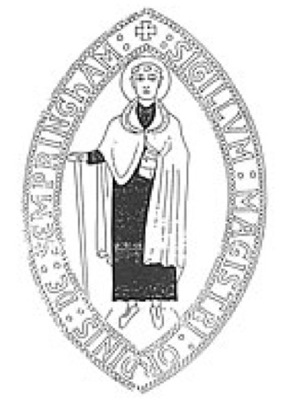
Gilbert Keith Chesterton was named for St. Gilbert of Sempringham, who was, of course, from Sempringham.*


This is the seal of Sempringham. It features St. Gilbert.

Gilbert was born at Sempringham, near Bourne in Lincolnshire, the son of Jocelin, an Anglo-Norman lord of the manor, and an unnamed Anglo-Saxon mother. He had a brother, Roger, and a sister, Agnes.

Unusually for that period, his father actively prevented his son from becoming a knight, instead sending him to France, probably the University of Paris but possibly under Anselm of Laon, to study theology. Some physical deformity may have made him unfit for military service, making an ecclesiastical career the best option. When he returned in 1120 he became a clerk in the household of Robert Bloet, Bishop of Lincoln, started a school for boys and girls (the existing primary school at Pointon is still named after him) and was ordained by Robert's successor, Alexander.[4] Offered the archdeaconry of Lincoln, he refused, saying that he knew no surer way to perdition.


Now, that's the connection between St. Gilbert, whose unwillingness to become a higher clergy member was noted by Gilbert Keith Chesterton, and Sempringham.

Where do the Clinton's come in?

At the Dissolution of the Monasteries, Sempringham Priory** came to the Clintons***, who demolished it and reused the stone to build their residence on the site. Today little remains of priory or residence.


Which Barons might be distant relatives to Bill Clinton's stepfather, whose name he bears./HGL

* https://en.wikipedia.org/wiki/Gilbert_of_Sempringham
** https://en.wikipedia.org/wiki/Sempringham
*** https://en.wikipedia.org/wiki/Baron_Clinton

Monday, 29 June 2026

"and nobody knows that he assumes it." (Application, Galileo)


First, this may seem irrelevant, but this is statistics from yesterday:

France
131 + 20 + 151 + 1 + 1 + 1 + 4 + 39 + 6 + 4 + 6 + 22 + 1 + 23 + 10 + 39 = 459 (14:36, 27—28.VI)


Second, to the topic:

Galileo and the Bible
https://www.museumofthebible.org/book-minute/galileo-and-the-bible


The End of the Galileo Affair: Galileo's Theological Contributions
by Cory Hayes | February 15, 2024
https://churchlifejournal.nd.edu/articles/the-end-of-galileo-affair-galileos-theological-contributions/


Galileo and the Interpretation of the Bible
Published: March 1999 | William E. Carroll
https://link.springer.com/article/10.1023/A:1008657104961


More than one of above cite the famed quote that Galileo put into the mouth of Eminence or Monsignor Anon. : "the Bible doesn't tell us how the heavens go, but how to go to heaven" ... that on Springer even repeats a usual misattribution to Cardinal Baronius. Now, this made me think somewhat of a certain essay collection by Chesterton: The Thing. Or rather, I thought of the connection when on FB I saw a part of below quote:

Curiously enough, I find this sort of thing rather specially widespread in our age, which claims to possess a popular culture or enlightenment. There is everywhere the habit of assuming certain things, in the sense of not even imagining the opposite things. For instance, as history is taught, nearly everybody assumes that in all important past conflicts, it was the right side that won. Everybody assumes it; and nobody knows that he assumes it.


For instance, everyone assumes that if scientists settled on the world being older than 6000 to 7500 years, as different Biblical chronologies would indicate, it's because it's "good science" ...

A curious and amusing instance comes from America; in connection with Mr. Clarence Darrow, the somewhat simple-minded sceptic of that land of simplicity. ... And one of his arguments for that is that if they did believe in certain happiness beyond the grave, they would all kill themselves. He says that nobody would endure the martyrdom of cancer, for instance, if he really believed (as he apparently assumes all Christians to believe) that in any case the mere fact of death would instantly introduce the soul to perfect felicity and the society of all its best friends. A Catholic will certainly know what answer he has to give. But Mr. Clarence Darrow does not really in the least know what question he has asked.


Mr. Darrow is the lawyer of Scopes, in the famous State of Tennessee v. Scopes trial. Note, Chesterton doesn't mention State of Tennessee as simpleminded. What Clarence Darrow seems to have recommended, Chesterton may have heard of as rumoured that Germany was going to apply it and later applied it to the "simple-minded" in T4.

But first mention of "assumes" in The Thing:

Every leader-writer who thunders "Galileo" at us assumes that we know even less about Galileo than he does. Every preacher of popular science who throws a long word at us thinks we shall have to look it up in the dictionary and hopes we shall not study it seriously even in the encyclopaedia. Their use of science is rather like the use made of it by the heroes of certain adventure stories, in which the white men terrify the savages by predicting an eclipse or producing an electric shock.


OK, Chesterton read Tintin adventure Prisoners of the Sun ... or Hergé imitated the topos from other adventure stories, earlier than this album. But anyway, he had read some people Gish Gallopping against Catholicism with Galileo as a probable third to fifth word in an early sentence. Maybe even the first one.

Yesterday also, I came across someone speaking on a certain patristic position arguing that Israel would have been impossible, but he also mentioned the opposite position, of Israel coming back right in the end times. Anyway, he said ... (beginning after 10:22 and ending before 10:48) this little thing:

... we have become ideologically captured rather than formed by the unbending sturdiness of reality. Okay? We used to believe that the earth was the center of the solar system. Then upon new data, we realized it was in fact the sun. So when our presuppositions toward reality are falsified, the least we can do is be honest enough to admit it.


I commented on it and the comment was taken away, not sure if by him or on the cyber.

Now, he assumes people before ... Copernicus? Galileo? Newton? ... believed that the Sun was the centre of ... the solar system. Not of the universe, as correctly representing their belief (on most issues also mine), but of the solar system. Because what goes around us each night from East to West is absolutely only the Moon and Jupiter and Venus and things, while Sirius and Orion totally stay in the same place? In fact, the position he, and presumably his history teacher attributed to pre-Copernicans would have been refuted by me simply when I measured that Orion had moved 30° (or twice the 15° of using my outstretched arm and dispersed thumb and fingers as measure) during the two hours I had been away from S. to D. in a certain city scarce and village dense part of Sweden.* Because 2 * 12 hours = 24 hours. And 30° * 12 = 360° Orion, which no one ever took as "part of the solar system" moves 360° (or full circle) in 24 hours (or actually a few minutes less than that). No, no one ever believed a theory which would be such easy to refute, if he was a learned man.

Also, he assumes that we got "new data" and that becoming Heliocentric was the honest and only adequate adjustment to new data.

He didn't say which ones, not sure if his history teacher or even science class ever taught him that. Or if he retained what they tried to teach him.

Like, for Earth being round we have Magellan and modern flight routes. Do you propose Luke Starwalker and the maps Han Solo uses for Heliocentrism? Will you be very, very, very disappointed if I tell you that shots "on Tatooine" are actually from North Africa, like Mos Eisley on Tatooine is Ajim, Tunisia for outdoor and Elstree Studios on Shenley Road, Borehamwood, Hertfordshire for indoor shots of the Cantina. The 1977 film no more proves Heliocentrism than the Ganges' East bank reminding someone of Gibraltar actually proved Round Earth, in Aristotle's time. Try again.

But those who won't try are the guys who assume that in every important armed or intellectual conflict "the right side won" ... and who assume it so hard, they don't even know they assume it.

Like pretty many of the 459 page views I had from France in 24 hours, and also the videast Christopher Kuehl. As to Church Fathers who very early on gave some kind of mitigated support for some kind of Zionism, that would also involve Jews converting to Christianity. I support Jeff Morgan, not Netanyahu. Also not a fan of Hamas reducing Christians in Gaza (with soft bullying involving alcohol band but not limited to them, no doubt).

Hans Georg Lundahl
Paris
Sts. Peter and Paul
29.VI.2026

Romae natalis sanctorum Apostolorum Petri et Pauli, qui eodem anno eodemque die passi sunt, sub Nerone Imperatore. Horum prior, in eadem Urbe, capite ad terram verso cruci affixus, et in Vaticano juxta viam Triumphalem sepultus, totius Orbis veneratione celebratur; posterior autem, gladio animadversus, et via Ostiensi sepultus, pari honore habetur.

* Some old lady, who had helped the Norwegian resistance, back in her youth, may have taken my gesture as a NS salute, as Orion was c. 45° above the horizon ... it wasn't one. I'm pro-Franco and pro-Dollfuss. As to pro-Hitler, that's for art schools, not politics.

Monday, 11 May 2026

Astute observers of my FB Page Might Know: I Share Lots of Pro-Life and Lots of Chesterton


If you are friends with me on FB and actually look me up and have not noted this, astute is probably not the best description you can have for yourself. I mean, if I spend 30 min. on FB, I'm probably sharing at least five of either Chesty* or Lila Rose (or related) or both.

Unless I'm arguing on a FB group for Creation and against Evolution, for Flood and against Deep Time. For Angelic Movers and against Deep Space. For Freewill being real and against it being an illusion of law bound deterministic matter. That happens too.

Some who knew my MSN Group Antimodernism before it shut down in early 2009 will also know that I enumerated four authors who led me to the Catholic Faith in my youth, I can add from ages 9 to 25, to be precise ("don't be!"), these being in chronological order of my becoming their reader:

  • C. S. Lewis
  • J. R. R. Tolkien
  • Gilbert Keith Chesterton
  • Hilaire Belloc.


And the most obvious convert to the Catholic Church among these is Chesterton. CSL converted ... back to the Anglican Church he had stopped believing in after his mother died. JRRT actually did convert to the Catholic Church, but this is little known. He was too old to be received simply when his mother converted** so he had to go to Catechesis in order to convert. I think it was at age 12 he was received. Hilaire Belloc was a cradle Catholic, from an Anglo-French couple. The one person of the four who was first some kind of High Churchish Protestantism and then a Catholic, like my own case, was Gilbert.

So, if you have ever concluded he had sth to do with my conversion, you are right. He did not absolutely determine it, it was actually Tollers who gave me the clue when speaking of Anglicanism in the essay on English and Welsh, and it was in my case a matter of Church history: if the Church of England (that of CSL) or Church of Sweden (my own) were split off from the Catholic Church, I either had to defend splitting off, somehow, and it wasn't restorationism, like Joseph Smith would have defended it, or I had to sooner or later join the original Church.***

However, unlike Newman of whom I back then read only one book, the Apologia, Chesterton both accompanied my conversion and became a constant companion through my reading. So, here is on his conversion:

Why Chesterton Became Catholic: The Argument He Couldn't Escape
Catholic Frequency | 10 May 2026
https://www.youtube.com/watch?v=U1pp_TiUuN4


One part of my own argument was actually parallel to his, about agreeing with Catholicism, and this was the pro-life issue:

Thomas Aquinas Appears To A Pro-Choice Doctor... Then This Happens
Cameron Riecker | 9 May 202
https://www.youtube.com/watch?v=xMISqjS4FxE


The video is slightly inaccurate in implying that Communist Yugoslavia was part of the Soviet Block. In economics, Tito was continuing while Stalin was discontinuing the NEP, the pro-Kulak policy, which as a Distributist I like. This also led to a rupture between Yugoslavia and the Warszaw Pact, I think even before it was actually formed. However, in lots of other areas, like abortion, like anti-Christian compulsory education, like secret police, it was Marxist, which as a Christian I totally abhor. Like Social Democracy has worked roughly speaking like a Fascism in economics° (also to my liking) but also has loads of Marxism, not unlike Yugoslavia. Both economies obviously functioned better than the Soviet Block, but that doesn't mean the societies were necessarily all that human. Man has other sides to his being than pure economics.

But the point is, I was already abortion banner before joining the Catholic Church. When I say abortion is murder, I'm not simply submitting to the authority of the Church, I already knew that before I accepted this authority. It was one of the reasons for accepting it. Dito for my deep hatred of contraception. Chesterton shared these, but I already had these from mother before coming to him.

And as I was also a Young Earth Creationist on the day of my reception into the Church°° (or what I took to be such), you may imagine that my take on the Galileo trial was to a high degree caught by St. Robert Bellarmine defending Biblical inerrancy. I was OK with being allowed to be Deep Timer and Evolutionist if I wanted, I was OK with being allowed to be Heliocentric. I was even more OK with not being obliged to either. The book by Sister Broomé had recommended Heliocentrism as proven scientifically by parallax, but not presented this as obliging the conscience of the faith. At least, Heliocentrism wasn't proven in Galileo's day. Since 2001, I add: nor has it been proven since.

Hans Georg Lundahl
Nanterre UL
Sts. Philip and James, Apostles
11.V.2026

Natalis beatorum Philippi et Jacobi Apostolorum. Ex his Philippus, cum omnem fere Scythiam ad Christi fidem convertisset, tandem apud Hierapolim, Asiae civitatem, cruci affixus et lapidibus obrutus, glorioso fine quievit; Jacobus vero, qui et frater Domini legitur et primus Hierosolymorum Episcopus, e pinna Templi praecipitatus, confractis inde cruribus, ac fullonis fuste in cerebro percussus, interiit, ibique, non longe a Templo sepultus est.

* Not sure I should call him that, many who do are girls. ** When he was 8, I think. *** In my teens I simply didn't doubt that Caerularius split off from St. Leo IX rather than the inverse, in some of my adult years, I did have such a doubt and became Romanian Orthodox between late 2006 and Pentecost of 2009, when a sermon by an Orthodox priest or bishop drove me back to Old Rome, that sermon endorsing contraception, at least implicitly. ° Specifically, the Swedish Fascist Engdahl, admirer of Mussolini and of Perón, said one of his men (Nysvenskar) was also a party member, a high ranking one, of Social Democrats, and helped form the Saltsjöbad policies. While the technical solution is different, both Fascism and Swedish Social Democracy have as obvious at least short to mid term goals that Employers and Employees should get along and the state help out so they didn't make a civil war or attempts of Revolution over wages. °° At this point, in 1988, there was not yet any CCC with its § 283. Sweden was not France and did not have Pierres vivantes. Also, converts were not required to profess an obedience and acceptance of current positions of the magisterium, a profession "John Paul II" introduced in 1990, in a wording that doesn't make the adhesion conditional on its being a traditional position, unlike Trent Session IV (sententiam quam tenuit et adhuc tenet). I professed to accept what the Church "believeth, teacheth and proclaimeth to be revealed by God"

Sunday, 8 March 2026

Some People Hate the Man I Grew Up Into


To me it is a very fine shade, if any at all, how that doesn't mean hatred of me, but I'm trying to put it precisely from ... their pov, as much as I'm any good at second guessing it.

My father was absent. A grandfather wasn't, but died when I was eight. Another had died even earlier. A stepfather divorced ma, and I couldn't quite see him as a father afterwards.

So, my best male voices when growing up were a few key authors.

On my old site, the MSN Group Antimodernism, I announced them. Taking them in the order they came substantially into my life, they would be:

  • C. S. Lewis (before age nine)
  • J. R. R. Tolkien (around thirteen)
  • Gilbert Keith Chesterton (somewhat older, but still my teens)
  • Hilaire Belloc (already in my twenties).


People who hate these guys are very likely to hate the person I grew up into. I'm not saying people who love them will love what I've become, but I am saying their enemies are objectively (whether they know it or not) my enemies.

I am no longer nine. I am no longer thirteen. I am no longer in my late teens. I am no longer in my early twenties.

It should be very obvious to anyone who knows anything about personal development, that I have already become the man I'm likely to remain this mortal life, barring extreme miracles or extreme defection. If I read Foundation, Dune, or Elric, I'm not likely to change into a different person or to get me different convictions.

Elric is, as far as I've gathered, not reading it myself, about a kind of devil's contract between a man and a sword reminiscent of Tyrfing. I'm already aware of the concept of Faustian contracts, and I'm also aware that God can break them. This is a common thread between Sagen aus Österreich (where in one of these legends a knight gets a castle in return for dying and getting damned on his wedding day, but the hermit to whom he confessed argues, when Satan complains about the force majeur that's preventing him from taking "what is his" that Satan hadn't fulfilled the contract: there is no chapel in the castle, so it's not a proper castle for a knight) and Hilaire Belloc (where a man argues to sell his soul on the limit between the 19th and the 20th CC. and when St. Charles Borromeo steps in and the Devil complains, St. Charles says "well, you're one year too late, it was the night between 31st Dec 1899 and 1st of Jan 1900 you would have had your go" and as the Devil says he has the universities on his side, St. Charles replies "but I have the Pope on my side"). And I read Krabat by Otfried Preusler at age 10-ish as well (he was redeemed by the love of a virgin).

So Moorcock's contribution to the genre would be showing how the Devil's contract just carries on and on and on. I could of course have misunderstood Elric, I haven't read it.

Foundation made itself unreadable very quickly. Hari Seldon is very unbearable, while alive. "Oh, they are arresting us? Well, it was a 97.5 % chance that they were going to do that right now" He becomes an even more unbearable pseudo-Jesus in a wild second guessing of how Christianity came into existance, with Asimov presumably agreeing with Karl Marx on a purely human and on top of that Socialist (Marxist style) Jesus having become misunderstood. Not least in "the Dark Ages" ... I happen to know a thing or two of Church history, and don't need a bad novelist to tell me all about it in a strictly fictional parallel.

Dune seems to have a similar story. So, like I've avoided Foundation since that page where Seldon worship takes on blasphemous parallels to Catholicism, I've avoided Dune since I read up on the plotline or watched a youtube about it.

I just came across an essay by Moorcock, which says among other things:

I suppose I respond so antipathetically to Lewis and Tolkien because I find this sort of consolatory Christianity as distasteful as any other fundamentally misanthropic doctrine.


Not linking, look it up if you really must, but don't ask me to help you out.

Now, some people think, I'm the equivalent of a fatherless child. No. I was a fatherless child. I didn't remain one. Those who dispute that are evildoers who are willing to misidentify a fandom for Chesterton (or even Seven Chronicles of Narnia) with a certain type of adult Disney who (at least supposedly) have refused to grow up. Disney didn't just make his (then, mostly, except Fantasia) films and stories child friendly. He in a sense catered to children, which, unlike the child friendly part in Lewis, the four I grew up with didn't.

Tolkien specifically is on record as being against this catering. Spare the child a specific story, if you think he can't handle it. But don't serve it up in a mollified version.

And no, a happy end and a mollified version are not the same.

Hans Georg Lundahl
Paris
Oculi Sunday
8.III.2026

PS. Perhaps some of the guys I speak of are kind of short on people to mentor. The solution is not banding up to mentor me against my will (or through my weaknesses). The solution would have been to do less abortion, contraception, other versions of infertile sex, and more babies, when they were young./HGL

Friday, 26 December 2025

A Reflection on the Christmas Date


“Any one thinking of the Holy Child as born in December would mean by it exactly what we mean by it; that Christ is not merely a summer sun of the prosperous but a winter fire for the unfortunate”

– G.K. CHESTERTON


Hat tip to Dale Ahlquist for sharing, and Merry Christmas to him and to you and you and you ..../HGL

Friday, 13 June 2025

Or, I Did Care, and Proposed a Solution


Liam Cunningham on Palestinian Genocide:

r/Fauxmoi
1 Day ago | cmaia1503
Liam Cunningham: “If somebody doesn’t want to work with me because of what I’m saying, then they have done me a favor. Because I do not want to work with them. So it’s a very good way of finding out who the narcissists are, who are the genocide apologists are & who the genocide deniers are.”
https://www.reddit.com/r/Fauxmoi/comments/1l9pdi9/liam_cunningham_if_somebody_doesnt_want_to_work/


As I said, from the Israeli side, the pretended concern was that Hamas would embezzle humanitarian aid to buy weapons. From the Palestinian side, and not just the Hamas, apparently, Israel was giving too little.

Both sides claimed the other had shot at people trying to get food, but the claim that Israelis shot has witnesses from hospitals for itself.

So, how could Gaza get food, neither side more ammo, neither side be in a position to shoot at people who want food?

By letting in lots of Flotilla Boats and lots of Solidarity Trucks.

Meanwhile, Egypt is stopping those, which makes me even more suspicious of Egyptian collusion in the abduction. As long as Egypt doesn't say "we allowed Israel to police here" we must presume an act of piracy, with or without Egyptian participation.

So, that's what I did, when I had seen the alarm call from a fellow Swede, pre-recorded and sent when the vessel was being boarded.

Meanwhile, the strike on Iran, it does seem like an attempt to make my solution impossible, to at the very least delay. I past by on Place de la République, and wanted info if Liam was appearing. No, they said, Tel Aviv airport is closed. How convenient.

I'm reminded of a detective story by Chesterton (his Father Brown fiction are short story collections). The Broken Sword. In it, and I'm telling it chronologically, not as it was discovered, a man wants someone else's wife, he kills him, and then arranges a battle in the worst place possible for success or survival, just so the corpse of the victim can be covered by other corpses. After a long and useless stand, when the killed rival will be safely presumed to have died in the battle, he suddenly realises he's wasting lives, and hands his broken sword to the enemy, after which he is hailed as a peacemaker and also gets to console the woman he wanted. Finally, Father Brown, decades later, decides not to reveal this, because there have been no accusations on the monument against the victor of the conflict — a freedom fighter. If there had been, he would have spoken up.

Now, that story is fictional, as far as I can see. Sir Arthur St. Clare, the honoured culprit, has no wiki other than that of the one on Chesterton's story. The Brazilian patriot Olivier also has no wiki outside it.

Speaking of Brazil, Thiago Ávila may have taken words into his mouth that totally disgust people with Israeli loyalties, but that's not a war crime, what was done to the Flotilla kind of is and lots of what is done in Gaza certainly is.

Point is, bombing Iran right now seems a bit like the move of Sir Arthur St. Clare. Maybe there was a real risk of Iran achieving nukes. But the lying around Madleen discredits the Israelis as a source. Or, maybe, maybe, Netanyahu is trying to pile up corpses above that of Thiago's freedom (so far) and the physical ones of the Gazawis.

If those remaining in Israeli custody were released immediately, free to move, given a truckload of food (from a trusted source, like Jews for Jesus or some Palestinian priest in the area) and were allowed to go on a humanitarian mission where they wanted, and depart from where they came, boatway from Ashdod, restoring the Madleen, that would be a very good move. An even better one would be to ask Egypt to open up for truckloads of food. Probably more than the 120 that the IDF claims to have distributed.

Hans Georg Lundahl
Paris
Ember Friday after Pentecost
13.VI.2025

PS, the title is an answer to a thing said by Liam Cunningham in above recording./HGL

PPS, the migrants from Libya:

https://www.youtube.com/shorts/EfGc0lfa4Xw

PPPS, Netanyahu cited a heresy from the Talmud in this context:

Nowhere in the bible it says to be the first to stand up and act when someone comes to kill us, as Netanyahu claimed in his speech today. In fact, this teaching is in the Talmud: Sanhedrin 72a!


From a feed under a video by Taylor Marshall./HGL

This one:
Did Israel Just Spark World War 3? – Dr. Taylor Marshall
Dr Taylor Marshall | 13.VI.2025
https://www.youtube.com/watch?v=_pGpYOO-reA

Wednesday, 23 April 2025

Par exemple ....


L'Abbé Raffray louait indirectement mon activité :

Par exemple Saint François de Sales qui était 3:47 un grand grand évêque du 17e siècle 18e 3:53 siècle [du 16e et 17e, vous voulez dire?] vous vérifiez Saint François de Sales 3:59 par exemple est très célèbre parce que il avait euh euh il imprimer des des documents qu'il distribuait 4:06 dans les boîtes aux lettres. Donc chacun on peut on peut citer par exemple Saint Maximilien Kolbe qui avait 4:12 mis en œuvre toute une imprimerie avec un journal pour diffuser l'enseignement de la foi


Rycerz Niepokalanej ... une des raisons à apprendre, si possible, le polonais.

Les deux exemples ... Saint François de Sales était évêque, le vénérable Maximilien frère et prêtre. Est-ce qu'un laïc peut suivre l'exemple ?

En effet, Gilbert Keith Chesterton et Hilaire Belloc, sans oublier Tom Zimmer, que j'ai eu l'honneur de rencontrer, étaient, les trois, laïcs. Pour Tom Zimmer, Hope 84, to honor Our Lady's Assumption, et pour Chesterton, The Catholic Church and Conversion, ou déjà Heretics, Orthodoxy, The Everlasting Man, pas besoin de préciser qu'ils écrivaient sur des sujets touchant la théologie, tout en étant canoniquement des laïcs. Hilaire Belloc ?

The Catholic Church and History (New York: Macmillan, 1926) Au moins aussi catholique que par exemple Jean Sevillia. Que j'apprécie.

Ou encore :

In the 1920s, Belloc attacked H. G. Wells's The Outline of History.  Dans les années 1920, Belloc attaqua The Outline of History [le contour de l'histoire] par H. G. Wells.
 
Belloc criticised what he termed Wells's secular bias and his belief in evolution by means of natural selection, a theory that Belloc asserted had been completely discredited.  Belloc critiqua ce qu'il appelait le biais séculariste de Wells, et sa croyance dans l'évolution par le moyen de la sélection naturelle, une théorie que Belloc prétendit complètement discréditée.
 
Wells remarked that "Debating Mr. Belloc is like arguing with a hailstorm".  Wells remarqua que "faire le débat avec M. Belloc est comme d'argumenter avec une averse de grêle."*
 
Belloc's review of Outline of History observed that Wells's book was a powerful and well-written volume "up until the appearance of Man, that is, somewhere around page seven".  La critique par Belloc de l'Outline of History observa que le livre de Wells était un volume puissant et bien écrit "jusqu'à l'apparaison de l'Homme, c'est à dire vers la page sept".
 
Wells responded with the small book Mr. Belloc Objects. Wells répondit avec le petit livre Mr. Belloc Objects [M. Belloc n'est pas d'accord]
 
Not to be outdone, Belloc followed with Mr. Belloc Still Objects. Ne voulant pas se faire surpasser, Belloc fit suite avec Mr. Belloc Still Objects. [M. Belloc n'est toujours pas d'accord]
 
G. G. Coulton wrote Mr. Belloc on Medieval History [in] a 1920 article.  G. G. Coulton écrivit Mr. Belloc on Medieval History [M. Belloc sur l'histoire médiévale], un article de 1920.
 
After a long-simmering feud, Belloc replied with a booklet, The Case of Dr. Coulton, in 1938. Après une vendetta qui mijotait longtemps, Belloc repliqua avec la brochure The Case of Dr. Coulton [le cas le Dr. Coulton], en 1938.


Ou, est-ce qu'un laïc qui se prononce sur la théologie est obligé d'avoir fait une thèse en théologie ? Non.

Pour Tom Zimmer, je ne connais pas une telle thèse, il était vétéran de la Seconde Guerre Mondiale je pense (qui finissait à ses 19 ans), et pour Chesterton et Belloc, dont je connais les biographies un peu plus en détail, je connais l'absence d'une telle thèse. Ni l'un, ni l'autre, n'étaient docteur ou même licencié ès la Sainte Théologie.

Ce qui leur importait n'était pas restreint au salut des âmes, qui n'était pas leur responsabilité sauf bien entendu les leurs et ce qu'ils voulaient encore achever par la pénitence pour les pêcheurs, mais plutôt toute la culture catholique, moi, pareil.

Notons, Belloc n'avait jamais dans sa vie été Protestant, Tom Zimmer non plus, et les deux étaient anti-évolutionnistes. Chesterton était ambigu sur les millions d'années en soi, mais très contre l'origine prétendue de l'homme auprès des singes. Il avait au moins jamais dans sa vie été Puritain, après d'être séculariste (voire en certains temps occultiste) il devint d'abord un "Anglo-Catholic" (anglican catholisant) et ensuite Catholique tout court.

Ce serait profondement malhonnête de me prétendre, soit non-Catholique parce que je refuse l'Évolutionnisme, soit non-laïc parce que je me mêle en des question théologiques de base comme "doit-on croire en Dieu, doit-on croire en Jésus-Christ, doit-on croire qu'Il a fondé l'Église Catholique, doit-on rejeter les théories de l'Évolution et de l'Héliocentrisme". Si quelqu'un prétend "mais il doit étudier la théologie d'abord" ... non, un prêtre est obligé d'étudier la théologie, parce qu'il doit pouvoir répondre à toute question et à tout problème, cet objection est simplement une manière détourné de me tamponner comme non-laïc. Pour bien entendu pouvoir me contrôler par la discipline cléricale ou d'étudiant ou quelque, ce qui n'arrange pas mes affaires comme écrivain, pour dire les choses très gentiment.

Si l'Abbé Raffray voulait prétendre que je ne suivais pas le bon exemple de Chesterton, Belloc, Zimmer, il devait l'argumenter sur le fonds des arguments que je profère, et non sur "la forme" dans le sens de formalité ou manque de telles. St. Justin aussi était laïc.

Hans Georg Lundahl
Paris
Mercredi de Pâques
23.IV.2025

La citation de l'abbé Raffray est d'ailleurs sur la vidéo : MORT DU PAPE : OFFENSIVE DES TRADIS, sur le canal OMERTA

S'il préfère une citation du clip d'une autre vidéo, sur son propre canal, qu'il le dise !/HGL

* Belloc pratiquait en d'autres mots ce que certains ont prétendu détester chez les Créationnistes, le Gish Gallop. Le galop et l'averse de grêle sont des métaphores pour le même style d'argumentation, c'est à dire d'ajouter argument après argument pour une même chose assez vite fait.

Wednesday, 5 March 2025

Apologète n'est pas un titre


Je tombe sur la vidéo de Matthieu Lavagna, bel et bien un apologète selon le contenu de ses monographies, et j'essaie de vérifier les propos de l'Abbé Gleize sur lesquels il répond.

Et la page 8 du Courrier de Rome, accessible en ligne, du Novembre 2024, je trouve :

La suite ne s’est pas fait attendre : jeune diplômé (en 2019) de l’Institut privé Docteur angélique 1 patroné par Monsieur Arnaud Dumouch, s’intitulant « apologète », Mathieu Lavagna intervient régulièrement, pour aborder mille sujets, sur sa propre chaîne Youtube 2, « dédiée à l’apologétique catholique, c’est à dire à la défense rationnelle de la foi catholique », ainsi que sur nombre d’autres chaînes, comme celles de Marie de Nazareth 3, de KTO TV 4, de l’abbé Mathieu Raffray 5 ou d’Arnaud Dumouch 6.


Pourrait-on dire que Stéphane Bern s'intitule "historien" ou "patrimonialiste" ? Peu importe ici s'il a pris les mots dans sa propre bouche ou non, c'est sûr qu'il est parfois pris, et pas toujours à tort, comme référence dans l'histoire. Et qu'il l'a voulu. Par contre, le titre serait plutôt, animateur et écrivain, comme pour Matthieu Lavagna. Si on veut décrire Stéphane Bern ou Marion Sigaut comme des historiens, ou Matthieu Lavagna ou Gilbert Keith Chesterton comme des apologètes, ou moi-même* comme les deux, ceci n'est pas à prendre comme le titre.

Parfois, une description de métier est un titre, comme en France boulanger-patissier et il y a d'autres qui relèvent des Compagnons du Devoir et qui ont, peut-être aussi, leur "meilleur ouvrier de la France" de chaque année. Mais parfois, une description est juste une clarification de contenu.

Pour faire de l'apologétique, licitement, il faut :

  • connaître la ou les vérités catholiques qu'on veut défendre ;
  • connaître la ou les objections contre lesquelles on veut les défendre ;
  • argumenter, idéalement bien (personne va denier à James White d'avoir agi en apologète du Protestantisme quand il a, semble-t-il, récemment argumenté mal contre Joe Heschmeyer, pas plus qu'on refuse de reconnaître Hannibal comme général s'il a perdu contre Scipion) ;
  • éventuellement, si on veut le faire en écrit, avoir pour l'imprimé, livre ou autre, un nihil obstat et imprimi potest pour ce discours (qu'on peut avoir sans être reconnu comme Catholique, tant que c'est pour une vérité catholique qu'on s'est dépensé en écrivain), mais il semble qu'un dispositif liant en conscience les Novus Ordo, pris par "Paul VI", manque de ressources pour les Catholiques non-Novus Ordo et non-Una Cum, l'existence de l'internet avec sa rapidité de publication rendent cette condition obsolète.


Pour parler de s'intituler apologète, comment pense l'Abbé Gleize ?

Les ordres mineurs sont portier, lecteur, apologète, acolyte ? Non, c'est "exorciste" qu'il faut mettre là.

Ou chaque diocèse doit avoir un apologète en service, personne d'autres est censé faire de l'apologétique ? Encore une fois, c'est "exorciste" qu'il faut mettre là.

Ou "Apologète" est l'abrégé des titres "maître, docteur, professeur, professeur adjoint ès l'apologétique" ? Ça existe, mais depuis peu de temps. Gilbert Keith Chesterton n'avait pas obtenu ce genre de diplome avant de faire Everlasting Man. Cérise sur le gâteau, je ne pense pas qu'il avait même obtenu un nihil obstat, à moins d'en avoir obtenu l'équivalent moral, car sur le livre publié chez Hodder and Stoughton, Londres, imprimé chez Constable Ltd Edinburgh, ne porte pas de nihil obstat. Peut-être la note préfatoire est censé pallier à ce manque, car il dit :

This book needs a preliminary note that its scope be not misunderstood. The view suggested is historical rather than theological, and does not deal directly with a religious change which has been the chief event of my own life; and about which I am already writing a more purely controversial volume. ...


Je pense par contre, même The Catholic Church and Conversion et Upon This Rock manquent nihil obstat (corrigez-moi si j'ai tort). Pourtant, Chesterton est un grand apologète, ainsi qu'une grande voix de la doctrine sociale de l'Église, puisant davantage en Rerum Novarum qu'en Quadragesimo Anno, donc plutôt Distributiste que Corporativiste (je suis, comme Belloc, les deux), et Pape Pie XI l'a décoré (ainsi qu'avec Hilaire Belloc).

Ce n'est donc pas correct qu'on ne puisse pas faire de l'Apologétique sauf en ayant une autorisation spéciale, comme désignation d'office, comme titre, ou autre.

Si l'idée de s'intituler Apologète vient, par contre, de Matthieu Lavagna et de l'Institut privé Docteur angélique vient de Monsieur Arnaud Dumouch, j'y vois une tentative d'emprise sur les libertés que certains ont à mi-cœur promue. Et notamment pour des mobiles pas tout à fait honnêtes, comme de réserver le "titre" (qui n'en n'est pas, ni canoniquement, ni légalement devant la loi civile) pour des gens qui prennent Bergoglio pour le pape et le créationnisme jeune terre pour une position théologique obsolète.

Hans Georg Lundahl
Paris
Mercredi des Cendres
5.III.2025

* En anglais, à part les débats, je pose le contenu apologétique sur trois blogs, en occurrence :

Creation vs. Evolution, dédié à l'apologétique naturelle en ce qui concerne la réfutation de l'Évolutionnisme, l'apologétique de l'inerrance biblique en tant qu'elle concerne les premiers 11 chapitres de la Genèse, ou de la chronologie biblique (du martyrologe romain);

somewhere else, le reste de l'apologétique naturelle, le reste de l'inerrance biblique, l'apologétique chrétienne, contre Athées et Juifs;

Great Bishop of Geneva! l'apologétique catholique, contre les Protestants et les Modernistes.


J'ai aussi un blog, en anglais et français, cette fois, dédié à l'histoire, à l'histoire culturelle, aux langues et aux lettres :

Φιλολoγικά/Philologica

Sunday, 16 February 2025

Chesterton


The Persecution of the Common Man | GK Chesterton
Return To Tradition | 16 Febr. 2025
https://www.youtube.com/watch?v=f7x7moYy6Ek


Some of Chesterton's terms have been replaced by Dr. Anthony Stine so that the video doesn't get demonetised.

I'm as uncommon as Chesterton, likely to write .../HGL

Tuesday, 15 October 2024

In a Country Where "Holocaust Denial" is No Crime


There is a forum on which I was discussing guys like Leuchter and guys like Jo Wajsblat.

When someone stated that Leuchter and Faurisson had been dismissed, I reacted to the passive in order to mention why passives are used. In his case in order to take away the identity of partiality of those actively dismissing them. It so happens, I mentioned a few other instances where passive "is used" (this passive is due to the very wide number of different people using passives). One is when the active agent is unknown.

I looked up a detective story by Chesterton.

I mentioned that whenever one could have said "Leonard Quinton is murdered" it was unknown who had murdered him, who the murderer was.

When the murderer who has tried to make it seem like suicide himself actually commits suicide, he signs a farewell letter to Father Brown with the name: James Erskine Harris.

Given the propensities of a certain other Harris to promote abortion, and given that abortion (when chosen by the mother), while primarily a murder has at least some kind of reminiscence also of suicide, I wonder whether Chesterton was making a prophecy about Kamala when he wrote the detective story.

Which side I'm on in that forum discussion, well, at least some party of it would be an outlaw in France, so I refrain from telling.

Hans Georg Lundahl
Paris
St. Thecla of Kitzingen
15.X.2024

In Germania sanctae Theclae, Abbatissae et Virginis, quae, monasteriis Kitzingae et Ochsenfurti praeposita, multis cumulata meritis in caelum migravit.

Friday, 20 September 2024

Why "Labyrinth"?


Φιλολoγικά/Philologica: Suppose ONE Single work by GKC had Inspired Lord of the Rings ...? · New blog on the kid: Why "Labyrinth"?

Some flippant guy may pretend David Bowie wanted to cosplay as an actor.

There is something else to it. I saw a video which complained that Labyrinth was basically just yucky, a fifteen year old girl being the object (more than half of the time) of sexual attentions from either David Bowie, sorry, Jareth, or less reputable and delicate males clearly older than herself.

Perhaps there was some point in that. I recall that as the magic spells were spelled out as saying, if she had lost her purity, she would have forgotten about her brother whom she wanted to save, and so, she would have betrayed. I recall rooting for her to keep her purity. In the eighties, this was a time period in which the élite wanted to sensitise people against paedophilia. And perhaps this was the way to do it. Show a peach with a worm in it. Show a fifteen year old pulled between a real duty to care for a brother and a so fake attraction to the lure of sexual maturity in men and sexual pleasures waiting around the corner, never directly imagined, but never quite forgotten.

Make the public squirm at every second when she grows closer to falling for Jareth, make the public cheer when she recalls her purity.

The result of the campaign has ultimately been the opposite of saving brothers. So many fifteen year old girls are now deprived of the right to marry (as happened in France 2006) or to marry next year (as happened in England and Wales following suit after Scotland). Girls are being told it's quite OK to train for motherhood in babysitting, but not OK to actually become mothers. Someone quite as deadly as Jareth is hinted at being, but lots less charming was waiting for babies that were made when mothers that age showed by becoming mothers that they didn't get the memo.

But the film was an actual work of beauty, a real piece of art. Not just because of Jennifer Connelly, but because of the actual story. What inspired it, on the plane of story, as distinct from one very probable message in the context of the age?

We should be startled if we were quietly reading a prosaic modern novel, and somewhere in the middle it turned without warning into a fairy tale. We should be surprised if one of the spinsters in Cranford, after tidily sweeping the room with a broom, were to fly away on a broomstick. Our attention would be arrested if one of Jane Austen's young ladies who had just met a dragoon were to walk a little further and meet a dragon. Yet something very like this extraordinary transition takes place in British history at the end of the purely Roman period. We have to do with rational and almost mechanical accounts of encampment and engineering, of a busy bureaucracy and occasional frontier wars, quite modern in their efficiency and inefficiency; and then all of a sudden we are reading of wandering bells and wizard lances, of wars against men as tall as trees or as short as toadstools. The soldier of civilization is no longer fighting with Goths but with goblins; the land becomes a labyrinth of faërie towns unknown to history; and scholars can suggest but cannot explain how a Roman ruler or a Welsh chieftain towers up in the twilight as the awful and unbegotten Arthur.


This could have been to Labyrinth what the following may have been to The Lord of the Rings:

As we crossed a tilt of the torn heath I saw suddenly between myself and the moon a black shapeless pile higher than a house. The atmosphere was so intense that I really thought of a pile of dead Danes, with some phantom conqueror on the top of it. Fortunately I was crossing these wastes with a friend who knew more history than I; and he told me that this was a barrow older than Alfred, older than the Romans, older perhaps than the Britons; and no man knew whether it was a wall or a trophy or a tomb. Ethandune is still a drifting name; but it gave me a queer emotion to think that, sword in hand, as the Danes poured with the torrents of their blood down to Chippenham, the great king may have lifted up his head and looked at that oppressive shape, suggestive of something and yet suggestive of nothing; may have looked at it as we did, and understood it as little as we.


This also was by Chesterton, it was from the essay Ethandune.

Borrowing from Chesterton is no shame. He made a rich production and he was also able to live off it. But it would perhaps have been better if Sarah had been able to marry someone when returning to the human world, it is a little bleak to imagine the soldier of civilisation who fights goblins (and not goth chicks!) basically fighting to prolong celibacy while already by nature of marriageable age.

And it is perhaps not the utterly best taste to get her exposed to guys she absolutely couldn't marry, since that was not their game, even if it was only for the imagination. On the other hand, for Hollywood, this may have been a very healthy cautionary tale. But that may say more of Hollywood than of the ultimate impact of the film. Can it be redeemed? Perhaps yes.

Hans Georg Lundahl
Paris
Vigil of St. Matthew
20.IX.2024

Vigilia sancti Matthaei, Apostoli et Evangelistae.

Thursday, 18 July 2024

Chesterton


Lita Sanders, née Cosner wrote an article on him.

It's generally very good and it's also good in what Chesterton had to say against Science Worship and Evolutionism.

G.K. Chesterton: Darwinism is ‘an attack upon thought itself’
by Lita Sanders, prepublication version then revised for Journal of Creation 23:1 (2009)
https://creation.com/gk-chesterton-darwinism-is-an-attack-upon-thought-itself


Now it contains a passage with a footnote, which taken together sound a bit quaint to me:

G.K. (Gilbert Keith) Chesterton (1874–1936) was a prolific British writer, whose poetry, fiction, books and essays argued for a Christian1 worldview in the early 20th century, long before the term ‘worldview’ was coined.

1 Chesterton was a Roman Catholic, but most of his works defend generic Christianity as defined by the ancient Apostle’s Creed, accepted by most Christian denominations.


He would have answered, there are some people who find it hard to get that Roman Catholicism and Christianity are one and the same thing. Protestants are only Christians, because they retain parts of Roman Catholicism. Calvin was a Christian precisely as much as he was a Catholic, he was a heretic precisely as much as he was diseased as a Catholic, ill in his faith.

The Rosary is as Christian as the Bible. The Gospel is as Catholic as the Mass.

What Lita, now Mrs. Sanders, calls "most Christian denominations" are a minority of all Christian persons. Slightly more than half of the Christians are Catholic, last time I viewed statistics, if it's now slightly less than half, I'd find even that surprising. Of the remainder, 1/3 are Orthodox, and the remaining 2/3 of the remainder (less than 1/3 of the Christians) contain the Protestants, largest of which are 1/3 Anglicans / Episcopalians.

Orthodox and Anglicans share things with Catholics that many Evangelicals are against.

Let's ignore Copts and Armenians for the moment. Let's go by these statistics, even if they are old.

Evangelicals and Calvinists = 1/2 * 2/3 * 2/3 = 22.22 %. That's the section which contains "most Christian denominations" ...

Yes, Chesterton did defend "generic Christianity" because, that is a very important part of Roman Catholicism. It is also an important part of Anglicanism, and he was Anglican prior to becoming Roman Catholic. But next to Atheism, Communism and Eugenics, the groups he is most against are Calvinists and Capitalists. He also sees that as the real origin of Atheism, Communism and Eugenics. I'm glad for Evangelicals that find the fruits of Calvinism bitter. Partly because they share generic Christianity with us Roman Catholics, but also partly because it's a hopeful sign of possible recovery.

You see, James Hutton, the old age pioneer from Siccar Point, which CMI loves to poke at as much as Chesterton loved to poke at Calvin and the Calvinist lords, educators of Edward VI, educators of James VI (and later I), James Hutton was from Edinburgh and University of Leiden, two strongholds of Calvinism, he's buried in Greyfriar's Kirkyard, but this is no longer run by Franciscans, it's the churchyard of St. Giles, which is Kirk of Scotland = Calvinist. Meanwhile, Darwin started out as an Anglican, Lyell seems to have transitions from Kirk of Scotland to Anglicanism.

I suppose it was somewhat bitter and disingenious to state 22 % contain "most Christian denominations" as Lita wasn't excluding Catholics and Orthodox, but it gives a wry humour which might have been appreciated by Chesterton. He could have made the point by saying, as he said of The Hound of Heaven, by the Roman Catholic Francis Thompson, "a Salvation Army officer would recognise its theology" ....

Hans Georg Lundahl
Paris
St. Camillus de Lellis
18.VII.2024

From the memory of Revd. Bryan Houghton, Unwanted Priest I recall (retranslating from French), how he started out with a tense relation to the Sacristan in his Chapel, until one morning the sacristan thought he had a gotcha "It's not white, Sir!" — "Sure it is, it's St. Camillus de Lellis!" — "You are an honest and pious man! My name is Camille de Chaussinand! Here, take the keys!" ... Revd. Houghton was no fan of Darwinism either.

Sancti Camilli de Lellis, Presbyteri et Confessoris, Clericorum Regularium infirmis ministrantium Institutoris, caelestis hospitalium et infirmorum Patroni; cujus dies natalis pridie Idus Julii recolitur.

Friday, 15 March 2024

Quoting Allie Beth Stuckey


Assorted retorts from yahoo boards and elsewhere: I Did Not Evade Swedish Prison, Nor Get an Unusually Early Release, and Trent Horn is just not as Catholic as I (First Half on a Video by Allie Beth Stuckey) · New blog on the kid: Quoting Allie Beth Stuckey

I always 1:01 get that question how do you have something to talk about every day how do you not run out of things to talk about 1:07 that is never ever ever the problem the problem is having enough time to talk 1:13 about all the things that we want to discuss


Olivia Rodrigo Hawks Free Plan B | Ep 968
Allie Beth Stuckey | 14.III.2024
https://www.youtube.com/watch?v=p7aRrRTM1eE


Like Allie Beth Stuckey and like Gilbert Keith Chesterton, I am what can very broadly be termed a content provider. Essayist? Chesterton. Vlogger? Allie. Blogger? Me.

I do not take drugs to get inspiration. I do not rely heavily on my very moderate consumption of alcohol or less moderate consumption of coffee to get inspiration.

I do not rely on an apparition from an alien or from a ghost or from an elf or from a known and recognised demon to get inspiration. I do not get dication from God. Nor pretend to.

I am not a medical professional who mainly does clinical stuff and once in a while when that clinical stuff prompts him also, as a side line, writes an article for the Lancet. I am not a pastor of any congregation, I do not on a daily basis preach the Bible or read the Bible to people or pray with people or counsel people and then, just once in a while, when that prompts me, write an article for l'Arche or Zwingliana or Communio. I do not intend to work that way.

I am a writer and I always have something to write about. Sometimes I'm just keeping up with an ongoing debate, like these two:

Assorted retorts from yahoo boards and elsewhere: Jimmy Akin on Pints with Aquinas, Two Clips
https://assortedretorts.blogspot.com/2024/03/jimy-akin-on-pints-with-aquinas-two.html


Assorted retorts from yahoo boards and elsewhere: Continuing with Mitterer
https://assortedretorts.blogspot.com/2024/03/continuing-with-mitterer.html


Or a few days ago:

Assorted retorts from yahoo boards and elsewhere: Evolutionist Talking Point : "Creationists Don't Know What They are Talking About"
https://assortedretorts.blogspot.com/2024/01/evolutionist-talking-point-creationists.html


Sometimes I write an essay as a spin-off on a debate:

Φιλολoγικά/Philologica: Indo-European Branches for I and II p. Plural, Pronouns
https://filolohika.blogspot.com/2024/02/indo-european-branches-for-i-and-ii-p.html


Sometimes I write one in response to sth stupid someone said:

Creation vs. Evolution: Modernity is a Myth, and Not the True One
https://creavsevolu.blogspot.com/2024/03/modernity-is-myth-and-not-true-one.html


Or to sth intelligent someone said:

Creation vs. Evolution: Odd Perfect Numbers? Less Impossible than Abiogenesis or Evolutionary Origin of Human Language!
https://creavsevolu.blogspot.com/2024/03/odd-perfect-numbers-less-impossible.html


Or one or two just like that:

Creation vs. Evolution: Neolithic Agrarian to Industrial Revolutions : Uniformitarian vs Creationist · Palaeolithic to Neolithic Era : Uniformitarian vs Creationist

And when I am really bored, I do my statistics or index posts:

New blog on the kid : Statistiques d'un mois
https://nov9blogg9.blogspot.com/2024/03/statistiques-dun-mois.html


New blog on the kid: Production February 2024
https://nov9blogg9.blogspot.com/2024/02/production-february-2024.html


New blog on the kid : Index XLVI en français, L'Immaculée Conception 2023 à Chandeleurs 2024
https://nov9blogg9.blogspot.com/2024/02/index-xlvi-en-francais-limmaculee.html


New blog on the kid: Index XLVI in English, Immaculate Conception 2023 to Candlemass 2024
https://nov9blogg9.blogspot.com/2024/02/index-xlvi-in-english-immaculate.html


I sometimes also do them when I am not really bored, because it gets time to do them.

And, like Allie Beth Stuckey, my problem is usually keeping up with all I'd like to say, not finding sth to say. This makes it a very nasty thing if I decide to for instance post an old draft on Quora and some administrator on a library thinks he is doing me some kind of favour or so by deleting it. Just in case no one did, just in case I clicked on the wrong button, I check, start discarding one which is so short it's no trouble remaking it if needed.


It's impossible to do that without getting a warning. So no, I did not do that. It was an admin. And I resent that. If people don't like what I write, there are two honest solutions: a) don't read it (but leave people who do read it alone!), b) engage in a debate. People who do neither, but keep me doing extra work and losing work already done the way outlined, they are just a pest.

Hans Georg Lundahl
Paris
Ste Louise de Marillac
15.III.2024

Wednesday, 30 August 2023

God and Gardens


Every attempt to amplify that story has diminished it. The task has been attempted by many men of real genius and eloquence as well as by only too many vulgar sentimentalists and self-conscious rhetoricians. The tale has been retold with patronising pathos by elegant sceptics and with fluent enthusiasm by boisterous best-sellers. It will not be retold here. The grinding power of the plain words of the Gospel story is like the power of mill-stones; and those who can read them simply enough will feel as if rocks had been rolled upon them. Criticism is only words about words; and of what use are words about such words as these? What is the use of word-painting about the dark garden filled suddenly with torchlight and furious faces? ‘Are you come out with swords and staves as against a robber? All day I sat in your temple teaching, and you took me not.’ Can anything be added to the massive and gathered restraint of that irony; like a great wave lifted to the sky and refusing to fall? ‘Daughters of Jerusalem, weep not for me, but weep for yourselves and for your children.’ As the High Priest asked what further need he had of witnesses, we might well ask what further need we have of words. Peter in a panic repudiated him: ‘and immediately the cock crew; and Jesus looked upon Peter, and Peter went out and wept bitterly.’ Has any one any further remarks to offer? Just before the murder he prayed for all the murderous race of men, saying, ‘They know not what they do’; is there anything to say to that, except that we know as little what we say? Is there any need to repeat and spin out the story of how the tragedy trailed up the Via Dolorosa and how they threw him in haphazard with two thieves in one of the ordinary batches of execution; and how in all that horror and howling wilderness of desertion one voice spoke in homage, a startling voice from the very last place where it was looked for, the gibbet of the criminal; and he said to that nameless ruffian,{240} ‘This night shalt thou be with me in Paradise’? Is there anything to put after that but a full-stop? Or is any one prepared to answer adequately that farewell gesture to all flesh which created for his Mother a new Son?

...

They took the body down from the cross and one of the few rich men among the first Christians obtained permission to bury it in a rock tomb in his garden; the Romans setting a military guard lest there should be some riot and attempt to recover the body. There was once more a natural symbolism in these natural proceedings; it was well that the tomb should be sealed with all the secrecy of ancient eastern sepulture and guarded by the authority of the Caesars. For{244} in that second cavern the whole of that great and glorious humanity which we call antiquity was gathered up and covered over; and in that place it was buried. It was the end of a very great thing called human history; the history that was merely human. The mythologies and the philosophies were buried there, the gods and the heroes and the sages. In the great Roman phrase, they had lived. But as they could only live, so they could only die; and they were dead.

On the third day the friends of Christ coming at daybreak to the place found the grave empty and the stone rolled away. In varying ways they realised the new wonder; but even they hardly realised that the world had died in the night. What they were looking at was the first day of a new creation, with a new heaven and a new earth; and in a semblance of the gardener God walked again in the garden, in the cool not of the evening but the dawn.


THE EVERLASTING MAN
PART II ON THE MAN CALLED CHRIST
CHAPTER III THE STRANGEST STORY IN THE WORLD
The Project Gutenberg eBook of The Everlasting Man, by G. K. Chesterton
https://www.gutenberg.org/files/65688/65688-h/65688-h.htm#CHAPTER_III-b


"God walked again in the garden" ?

God had strolled with Adam and Eve, obviously, in Eden, and also in Galilee which Chesterton compares to Eden:

Therefore the story of Christ is the story of a journey, almost in the manner of a military march; certainly in the manner of the quest of a hero moving to his achievement or his doom. It is a story that begins in the paradise of Galilee, a pastoral and peaceful land having really some hint of Eden, and gradually climbs the rising country into the mountains that are nearer to the storm-clouds and the stars, as to a Mountain of Purgatory.


Why did I come to think of this?

"Alan Titchmarsh defends the traditional garden against rewilding" is on tomorrow's blog post on Creation Ministries International:

CMI : Dominion and the blessing of the garden
by Andrew Sibley | Published: 31 August 2023
https://creation.com/dominion-and-the-garden


Yes, the earth is round, and CMI publishes in a time zone which unlike Paris already is on the 31st .../HGL

Wednesday, 10 May 2023

Chesterton Appreciated This Kind of Humour, But Not the Evil It Describes


Father's got the sack from the waterworks
For smoking of his old stony briar.
Father's got the sack from the waterworks
For fear it'd set the waterworks on fire!


Excellent poetry. But not an excellent work place, that waterwork.

Take a look at a similar situation:

Church Militant : Fed's Want the Sanctuary Lamp Extinguished at Catholic Hospital
https://www.churchmilitant.com/news/article/feds-want-sanctuary-lamp-extinguished-at-catholic-hospital


Fortunately, they backed down:

UPDATE (5/9/2023): On May 5, the Biden administration backed down and rescinded its threat to freeze funding over St. Francis Health System's sanctuary lamp.

The vice president and senior counsel at Becket Law, Lori Windham, stated, "The government has seen the light and has abandoned its attempt to force an Oklahoma hospital to blow out a small candle or stop serving elderly, disabled and low-income patients."

She added, "The government knew it was playing with fire — today it announced its decision to allow the living flame so Saint Francis can continue to serve God and its community, as it always has."


While I am glad they did, I am much less glad at the culture that made the threat in the first place./HGL

Sunday, 26 March 2023

Today's Chesterton Quote


I'm subscribed to Mercy Trimphs, which for all days in Lent has a Chesterton quote.

Today's Quotation.

“It is an actual fact that the dispossessed have more sense of possession than those who go away because they have great possessions; and in these days do not even go away sorrowful. We all agree that the sense of ownership has been almost exterminated; but it has in fact been exterminated more by those who own too much than by those who own too little. When we appeal to the broken men, we appeal to those who have lost their homes and their happiness; but they still have more notion that happiness might be found in a home. There is more of this in the homeless poor than we can now discover in the vulgar cosmopolitan crowd of the homeless rich.”

-G.K. Chesterton (“The Cry to Capitalists,” GK’s Weekly, December 5, 1935)


As a homeless, I definitely agree with Chesterton. But I do not agree with the Chesterton society in this thing here:

Act on it.

Organize a food, clothing, and essentials drive to benefit your local homeless shelter.


Sorry guys, no. That's perhaps a good thing or perhaps not, but totally irrelevant to what Chesterton was speaking about.

He was hoping, not that people without property should have some more comforts, which they do not own, where they exist only on someone else's mercy, where they go and have to follow someone else's rules. BUT that they could get back to a situation of property.

Decentralise farming, and some homeless could perhaps start by buying up a cheap and abandoned farm somewhere.

In my case, giving me a paper version platform and not whittling down my internet one, so I can actually live off my work as a writer would be magnificent. But unfortunately, they have not been heeding that call.

Hans Georg Lundahl
Paris
First Passion Sunday
26.III.2023